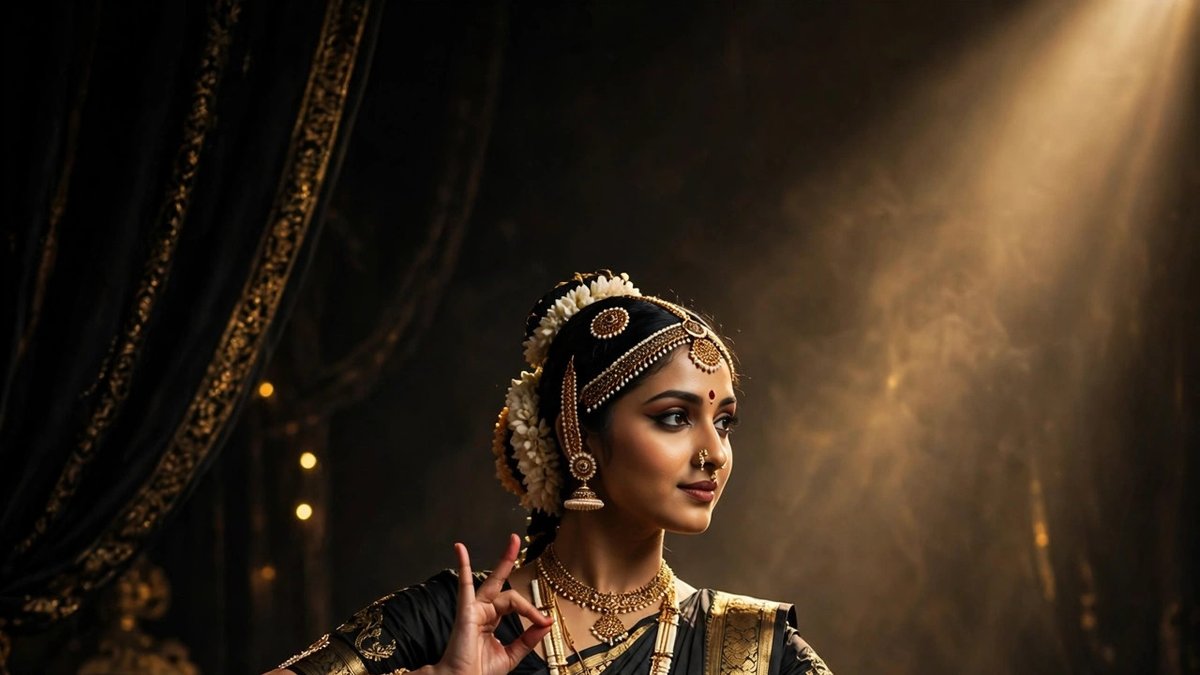
Bharatnatyam
One of the oldest classical dances in the world — geometry, grace and devotion.
Born
Ancient — described in the Natya Shastra, renamed Bharatnatyam in 1932
Where
Temples of Tamil Nadu, India
Founded by
No single founder — rooted in the Natya Shastra of Sage Bharata; revived in the 20th century by figures including Rukmini Devi Arundale
The History
Bharatnatyam comes from the temples of Tamil Nadu, where it was performed as Sadirattam (Sadir) by temple dancers as a devotional offering. Its theory traces to the Natya Shastra, the ancient Sanskrit treatise on performing arts attributed to Sage Bharata, with descriptions dating back to around 500 BCE–500 CE and the Tamil epic Silappatikaram (around 171 CE).
In the 20th century, after a colonial-era ban in 1910, the form was revived and brought from the temple to the stage, and renamed Bharatnatyam in 1932. Revival figures such as Rukmini Devi Arundale helped make it a respected concert art while keeping its discipline intact.
The style is unmistakable: a fixed upper torso, legs bent in araimandi, spectacular footwork (adavus), and a language of hand gestures (mudras) and facial expression (abhinaya) that tells stories from Hindu mythology, performed to Carnatic music.
The MOBS Way
A spiritual and disciplined approach to dance, combining Nritta (pure dance) and Nritya (expressive dance).
Its Elements
What You'll Learn
- → Araimandi (Basic Posture)
- → Adavus (Basic Steps)
- → Mudras (Hand Gestures)
- → Abhinaya (Expression)
Essentials
Traditional dance attire (Sari/Dress) and Ghungroos.
Improved posture, spiritual connection, and extreme discipline.